Table of Contents
- Why Solar Lights Are a Bright Idea for Your Palm Trees
- How to Select the Perfect Solar Lights for Your Palms
- Creative Lighting Techniques for Palm Trees
- Your Easy Guide to Installing Solar Palm Tree Lights
- Maintaining Your Lights Through Knoxville's Seasons
- Common Questions About Solar Lights for Palm Trees
Palm trees bring a slice of the tropics right to your Knoxville yard, but too often, they just blend into the shadows after sunset. If you've ever wanted to make these beautiful trees a nighttime feature without the headache of running electrical wires or watching your power bill creep up, there's a fantastic solution. The best solar lights for palm trees deliver on both energy efficiency and incredible aesthetics, giving you a smart, cost-effective way to make your landscape shine after dark.
Why Solar Lights Are a Bright Idea for Your Palm Trees
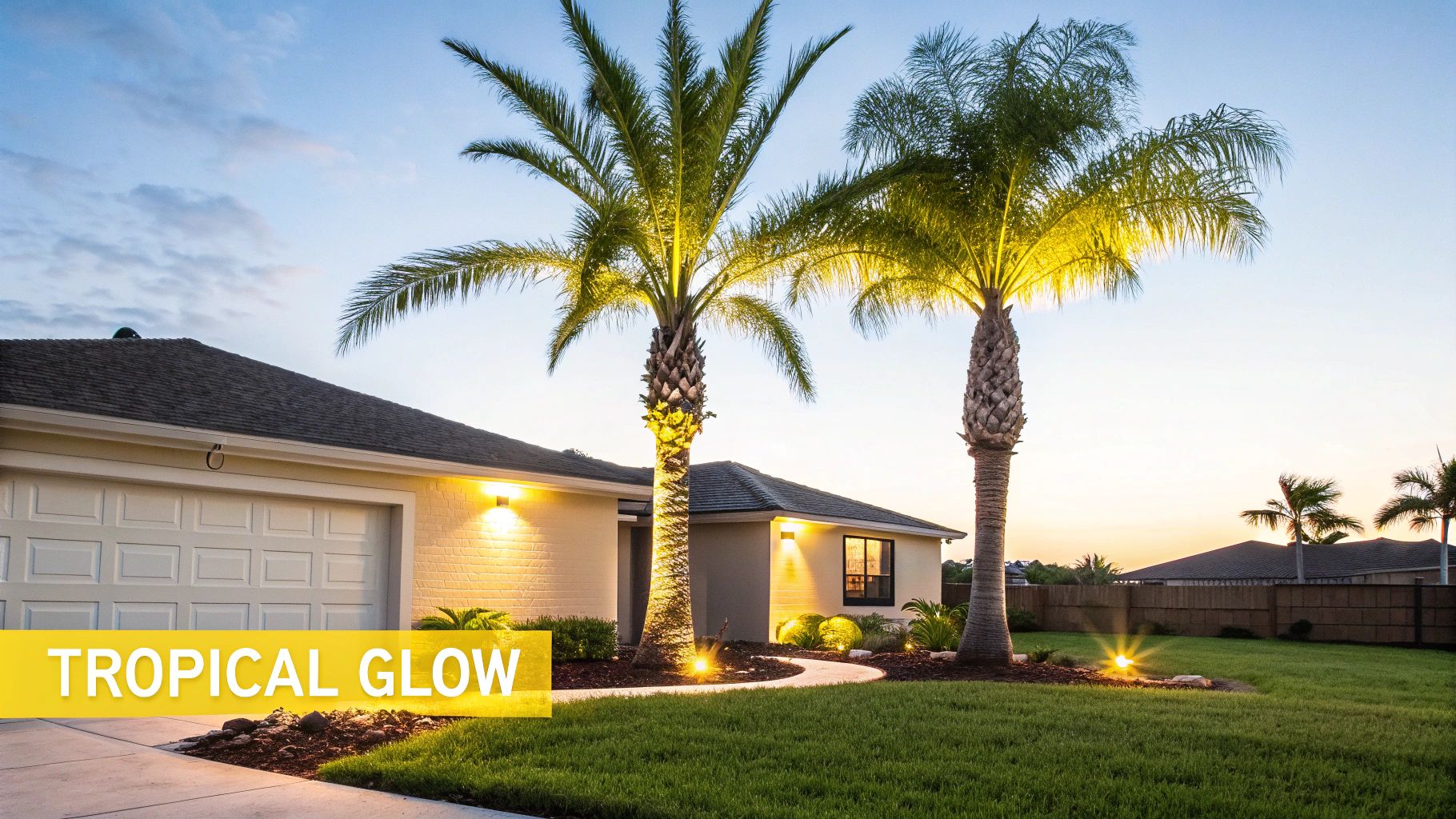
Picture your Farragut home's curb appeal getting a massive boost from elegantly lit palms. Or maybe you're creating a resort-like vibe for a backyard get-together in Hardin Valley. Solar lighting brings this vision to life easily and affordably.
Unlike old-school wired systems, solar-powered lights mean no digging trenches, no complicated wiring, and absolutely zero impact on your monthly KUB bill. It’s a clean, simple, and solution-focused approach to beautiful landscape lighting.
This is why solar lighting has become such a go-to for homeowners and businesses. The industry growth tells the same story: the global outdoor solar lights market was valued at $12.79 billion in 2024 and is expected to soar to $38.42 billion by 2030. This boom is driven by people just like you, looking for sustainable and straightforward ways to beautify their properties.
Key Benefits for Knoxville Homeowners
For those of us here in East Tennessee, solar lighting isn't just about saving a few bucks—it offers real, practical advantages. Today's solar technology is tough enough to handle our local weather, from the hot, sunny summers to those gray winter days.
Thinking about making the switch? Here’s a quick breakdown of why solar is such a smart move for your palms.
Quick Guide to Solar Lighting Benefits
| Benefit | What It Means for You | Ideal For |
|---|---|---|
| Eco-Friendly Ambiance | Light up your landscape without the guilt. Using the sun’s power means a smaller carbon footprint. | Homeowners who value sustainability and want a beautiful yard. |
| Unmatched Installation Flexibility | No outlets, no problem. Place lights wherever the sun shines—by the pool, at the back of the yard, or along a driveway. | Properties with unique layouts or trees far from the house. |
| Enhanced Safety and Security | A well-lit yard is a safer yard. It helps deter intruders and prevents trips and falls for family and guests. | Families, pet owners, and anyone wanting more peace of mind at night. |
| Minimal Maintenance | Set them and forget them. A quick wipe-down of the solar panel a few times a year is all it takes to keep them glowing. | Busy homeowners who want great results without constant upkeep. |
Choosing solar isn’t just about putting a light on a tree. It's an investment in a hassle-free system that boosts your home’s beauty and security at the same time.
For more inspiration on transforming your outdoor space, take a look at our guide filled with other great outdoor lighting ideas for your backyard.
How to Select the Perfect Solar Lights for Your Palms
Picking out the right solar lights for palm trees can feel a bit overwhelming, but it's actually pretty simple once you know what to look for. Think of it less like a technical chore and more like setting the stage for your landscape. It's all about getting the details right to create that perfect evening atmosphere.
The goal is to find lights that not only look incredible but can also handle those long, beautiful Tennessee nights without fading out. Every detail, from brightness to battery life, plays a part.
Decoding Lumens and Color Temperature
First, let's talk lumens. That’s just the professional term for brightness, and the amount you need depends on the vibe you’re going for.
- For a subtle accent: If you’re just trying to gently highlight a smaller Pindo Palm in your Farragut front yard, 100–200 lumens per light is usually plenty. It creates a soft, elegant glow that’s classy, not flashy.
- For dramatic uplighting: Got a tall, majestic Windmill Palm you want to show off? You’ll want to bump it up to 300–500 lumens. That’s enough power to light up the whole trunk and wash beautifully into the fronds.
Next up is color temperature, measured in Kelvins (K). This determines if the light feels warm and cozy or cool and modern. For most landscapes, a warm white (around 2700K–3000K) is the way to go. It gives off a golden, resort-like glow that’s incredibly inviting and flatters natural elements. Cool white (anything over 4000K) is much brighter and can sometimes look a bit sterile or harsh in a garden setting.
Choosing the Right Type of Solar Fixture
Solar lights come in a few different styles, and each one creates a unique look. For palm trees, spotlights are king. They’re the most popular choice for that classic, dramatic uplighting effect. You just stake them into the ground, point them up at the trunk, and you're good to go.
If you’re a holiday decorating enthusiast or an event planner, festive string lights are another fantastic option. Wrapping them around the trunk can add a truly magical and celebratory touch. It’s a huge market, too—global solar lighting is expected to jump from USD 8.2 billion in 2025 to USD 15 billion by 2035. That growth is bringing all sorts of new innovations for our gardens. You can discover more insights about the expanding solar market and see what’s coming next.
Pro Tip: Always check the battery life. A quality solar fixture should give you at least 8-10 hours of light from a full charge. This ensures your palms stay lit from dusk until dawn, even after a partly cloudy Knoxville day.
The Solar Panel Is a Big Deal
The solar panel is the heart of your whole setup, and they aren’t all created equal. You’ll generally find two types:
- Integrated Panels: The panel is built right into the light fixture itself. The design is clean and simple, but it means the entire light has to sit in direct sunlight to charge.
- Remote Panels: The panel is separate from the light, connected by a cord. This is a total game-changer for shady Knoxville yards. You can tuck the light fixture under a dense palm canopy and run the panel out to a sunny spot on your fence or roof.
If your palm tree sits in a shady spot for most of the day, a remote panel isn't just a nice-to-have, it's a must. That flexibility guarantees your lights get the power they need to shine bright, night after night.
Creative Lighting Techniques for Palm Trees
Once you've picked out the perfect lights, the real fun begins—designing the look. Professional lighting is all about using specific techniques to create mood, drama, and dimension. The great news is these pro-level effects are surprisingly easy to pull off in your own Hardin Valley or Farragut yard.
With just a few spotlights and a little creativity, you can turn a standard palm tree into a breathtaking nighttime feature. It’s about so much more than just pointing a light at the trunk; it’s about shaping the light to tell a story and create an atmosphere.
Master the Art of Uplighting
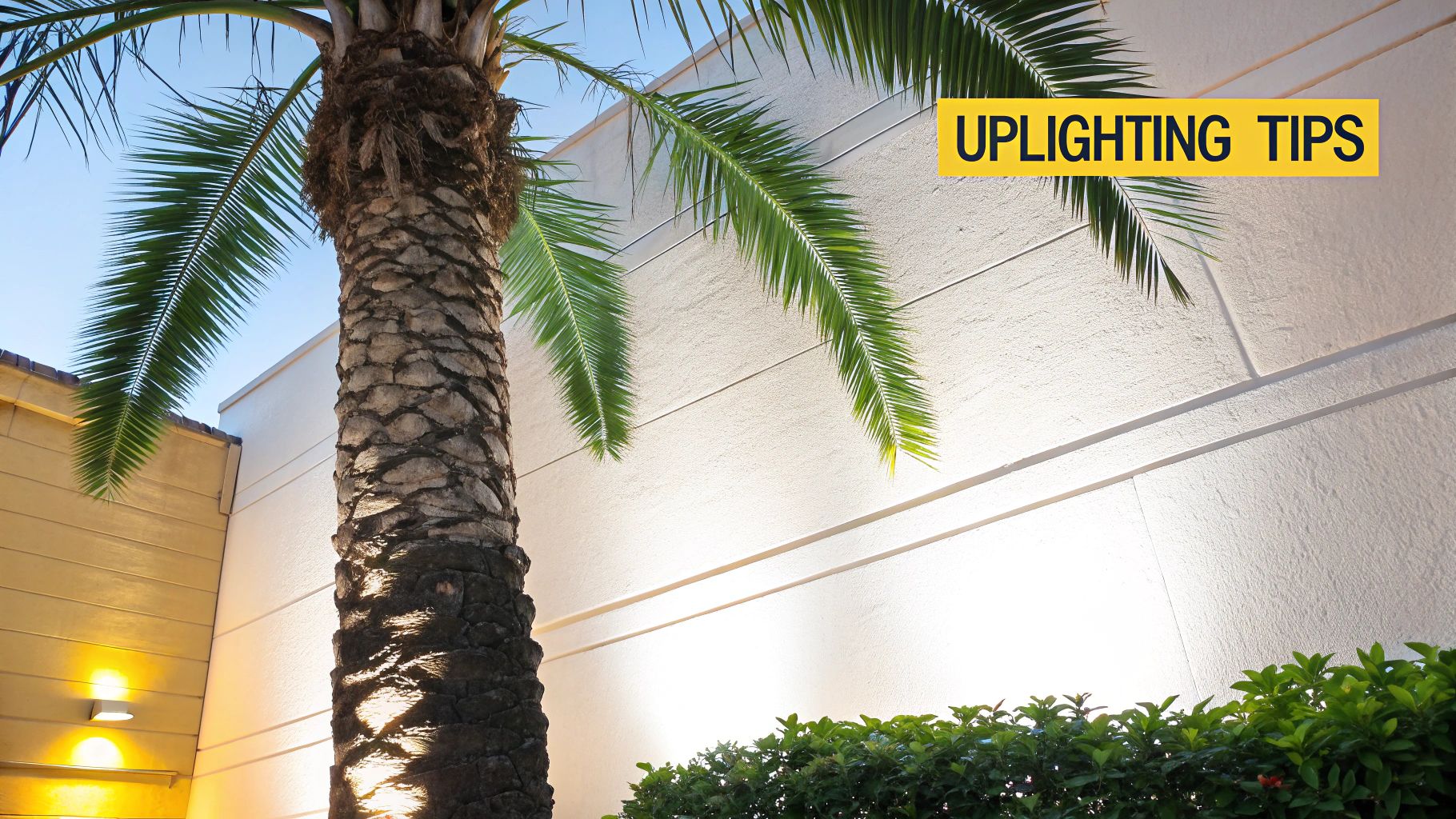
Uplighting is the classic, go-to technique for palm trees, and for good reason. It’s simple: place a spotlight on the ground near the base of the tree and aim it straight up. This approach works wonders, highlighting the unique, textured pattern of the palm's trunk while creating a gorgeous glow that filters through the fronds above.
Imagine your Windmill Palms standing like majestic silhouettes against the night sky—that’s the power of great uplighting. For a taller, slender palm, a single well-placed spotlight is often all you need. If you have a fuller Pindo Palm with a wider base, you might want to use two or three fixtures to get that even, beautiful coverage. This is a foundational technique in professional yard and tree lighting, and it’s remarkably effective.
Pro Tip: Don't be afraid to play with the distance. Placing the light closer to the trunk creates a dramatic, focused beam that grazes the bark. Moving it further back washes the entire tree in a softer, broader light.
Create a Natural Glow with Downlighting
Also known as "moonlighting," downlighting is a more subtle and organic-looking technique. The idea is to mount a light fixture high up in the palm tree (or even a nearby structure) and aim it downward. You’re trying to mimic the soft, gentle light of a full moon filtering naturally through the canopy.
The effect is pure magic for patios, walkways, or pool decks situated beneath your palms. It casts soft, dappled shadows on the ground below, creating an enchanting and romantic atmosphere that's perfect for a quiet evening in West Knoxville.
- Fixture Choice: Wide-angle flood lights work best here, as they cast a broad, gentle glow.
- Placement Strategy: Secure the light discreetly among the fronds. The goal is to hide the source, which really sells the "natural moonlight" feel.
- Safety First: This technique also creates useful, functional light for navigating your yard safely after dark, blending beauty with practicality.
Experiment with Beam Angles and Silhouetting
The beam angle of your spotlight has a massive impact on the final look. Think of it like the focus on a camera lens. A narrow beam, around 15-30 degrees, creates a tight, focused column of light that's perfect for accentuating the height of a very tall, skinny palm. On the other hand, a wider beam (45-60 degrees) is better for washing the entire canopy of a shorter, fuller tree in light.
For a truly dramatic effect, give silhouetting a try. This works best if your palm tree is positioned in front of a wall, fence, or another flat surface. Instead of aiming the light at the tree, you place the spotlight behind the tree and aim it at the wall. This trick hides the details of the palm itself, creating a bold, dark outline against a brightly lit backdrop. It’s a high-impact look that adds incredible depth and professional polish to your landscape design.
Your Easy Guide to Installing Solar Palm Tree Lights
Alright, you’ve picked out the perfect solar lights for your palm trees. Now comes the best part—getting them set up and watching your landscape come to life after the sun goes down.
Installing solar lights is something most homeowners can tackle themselves without calling an electrician. But, like any project worth doing, a little prep work makes all the difference between a decent result and a truly professional, long-lasting setup.
A Little Prep Goes a Long Way
Think of this as setting the stage. Before you even touch a fixture, spend a few minutes preparing both the lights and the tree. This small step ensures everything works perfectly from the very first night.
First, give the tree trunk a quick brush-down to knock off any loose dirt, dust, or old fronds. This creates a clean surface, which is a big help if you’re using wrap-around string lights, as it helps them sit snugly against the trunk.
Next, and this is the step you really can't skip: fully charge your lights before installing them. They might have some juice right out of the box, but you need to place the solar panel in direct, bright sunlight for an entire day. This conditions the battery and guarantees you’re getting maximum runtime from the get-go.
Mounting and Securing Your Lights
How you attach the lights comes down to the style you chose. For popular spotlights used for uplighting, the process couldn't be simpler.
- Get Them in the Ground: Drive the stake firmly into the soil around the base of the palm. Here in Knoxville, the ground can be pretty rocky in places, so you might have to hunt for a softer spot or clear a small area first.
- Aim for the Best Look: Angle the light fixture up toward the trunk. You can always fine-tune the distance and angle later, but a good starting point is to aim it so the beam grazes the bark and really shows off that great texture.
If you’re working with string or wrap-around lights, the main thing is to be gentle with the tree. Never use nails or staples. Puncturing the trunk can seriously wound the palm and open it up to disease. Instead, grab tree-safe options like adjustable plastic ties, soft straps, or reusable clips designed for outdoor lights. They'll hold everything securely without doing any damage.
Doing the installation right isn't just about looks; it's also about smart, sustainable lighting. In fact, studies on commercial and public projects have shown that well-placed solar lights can slash energy costs by 30-40% compared to traditional grid-powered options. You can read the full research on solar tree markets to see the bigger impact.
Finding the Sweet Spot for Your Solar Panel
This is probably the most critical part of the entire installation. Your lights are only as powerful as the charge they get, which means the solar panel needs as much direct sunlight as possible. Here in East Tennessee, that means finding a clear, south-facing spot.
Don’t feel like the panel has to be right at the base of the tree. If your palm is tucked away in a shady corner of your Hardin Valley yard, a remote panel is your best friend. The wire gives you the freedom to hunt for a sunnier location.
Look for places like:
- A nearby fence post
- The sunny edge of a garden bed
- A low-profile spot on your roof or shed
The goal is to find a place where the panel will get at least 6-8 hours of direct sun every day. This ensures a full charge, even on shorter winter days. A beautifully lit landscape is all about layering, and combining different fixtures is key. You can see how this works in our guide to low-profile pathway lights, which are a great way to complement the light on your palm trees.
Maintaining Your Lights Through Knoxville's Seasons
Once your solar lights for palm trees are up and running, a little TLC is all it takes to keep them shining bright for years to come. Here in Knoxville, we get to enjoy four distinct seasons, but each one brings a challenge for your lights—from that thick yellow spring pollen to falling autumn leaves and the occasional dusting of winter snow. A quick maintenance routine makes all the difference, ensuring your investment keeps paying off with beautiful, reliable light every night.
This quick visual guide really boils down the core of a great installation.
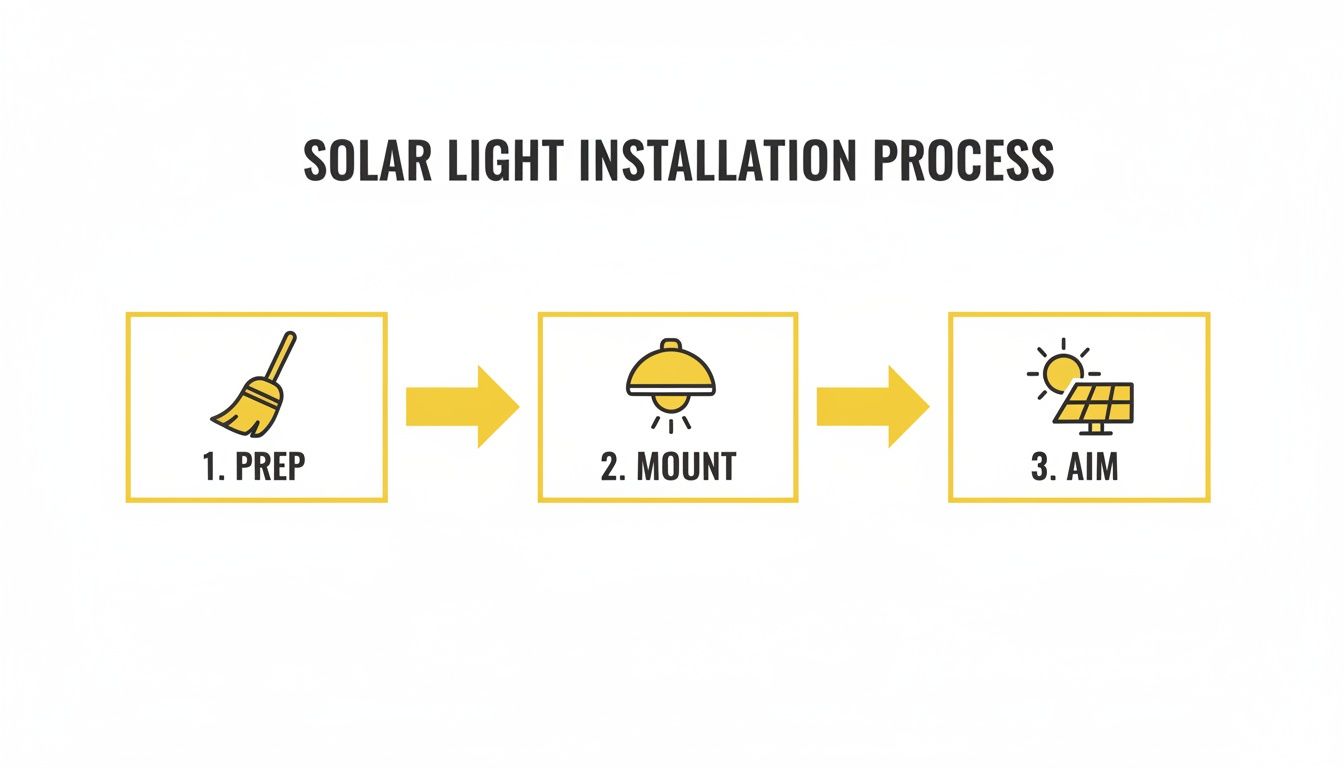
It all comes down to these three pillars. Good prep, a secure mount, and smart aiming of the solar panel directly impact how well your lights perform in the long run and how little maintenance they'll need.
Seasonal Upkeep for Peak Performance
The number one thing that impacts your lights’ performance is the solar panel's ability to soak up the sun. Anything that gets in the way—dust, pollen, leaves, or bird droppings—will cut down on charging efficiency and shorten how long they stay on at night.
Most of the time, all you need is a quick wipe-down with a soft, damp cloth a few times a year. You'll want to pay special attention in the spring when that yellow pollen coats literally everything, and again in the fall when leaves are blanketing our yards from Farragut to Hardin Valley.
Pro Tip: Don't be surprised if your lights have a slightly shorter runtime during Knoxville's cloudier winter months. That’s perfectly normal. To get the most charge, try adjusting your panel’s angle to catch the lower winter sun and make sure it's totally clear of any snow or frost.
Troubleshooting Common Solar Light Issues
Even the best lights can hit a snag. Before you write off a fixture as broken, run through these simple checks. Most of the time, it's an easy fix.
- Light Won't Turn On: Nine times out of ten, this is a dead battery from not getting enough sun. First, check that the panel is clean and getting at least 6-8 hours of direct sunlight. Also, make sure the power switch is in the "On" position—you'd be surprised how often that's the culprit!
- Flickering or Dim Light: This usually points to a weak charge or an aging battery. After cleaning the panel and checking its position, try turning the light off for a couple of sunny days. This lets the battery get a deep, full charge. If it's still acting up, the rechargeable battery might need to be replaced, which is a simple swap on most models.
- Reduced Runtime: If your lights are suddenly dying earlier in the evening, it’s almost always a charging problem. Take a look around—has a tree branch grown over the panel, casting a new shadow during the day?
For trickier issues or if you’re dreaming up a larger, more intricate lighting design, getting a professional involved can ensure everything is installed for peak performance and longevity.
Common Questions About Solar Lights for Palm Trees
We get a lot of the same questions from homeowners in Knoxville and Farragut when they start thinking about adding solar lighting to their palm trees. To make things easier, we’ve gathered the most common ones right here.
Will Solar Lights Work During Knoxville's Cloudy Winters?
Yes, they absolutely will. High-quality solar lights for palm trees are built to work all year long, even through those gray East Tennessee winters.
Modern solar panels are surprisingly efficient. They can still pull a charge on overcast days, though you might notice the runtime is a bit shorter than on a long, sunny summer day. The key is to make sure the panel is placed where it can soak up the most daylight and is kept clear of any snow or fallen leaves. Choosing fixtures with bigger battery capacities also helps bank more energy for those longer nights.
Can Solar Lights Damage My Palm Trees?
That’s a great question, and the answer is a firm no—as long as you install them correctly. The biggest rule to follow is to never puncture the trunk of the tree. Using nails or staples can create wounds that leave your palm vulnerable to disease.
Instead, always go with tree-safe methods:
- For string lights, use adjustable, soft straps or reusable plastic ties that won’t dig into the bark.
- For spotlights, it’s even simpler. Just stake them securely in the ground around the base of the tree.
These simple techniques keep your palm healthy while making it look fantastic.
How Bright Should the Lights Be for My Palm Tree?
The right brightness, measured in lumens, really comes down to the look you're going for. There’s no single right answer, but here are some guidelines we use for landscapes in the Hardin Valley area:
- For a subtle accent: If you’re lighting a smaller Pindo Palm, you often only need 100-200 lumens per light to create a soft, elegant glow.
- For dramatic uplighting: To turn a tall, mature palm into a real showstopper, you’ll want something in the 300-500 lumen range. This will beautifully highlight the height of the trunk and the texture of the fronds.
When you're dealing with festive string lights, don't get too caught up in the lumen count of each bulb. It’s more about the overall spacing and the warm, inviting ambiance they create.
When Should I Call a Professional for My Project?
While tackling a tree or two yourself can be a fun weekend project, it’s a good idea to call in a pro for larger or more complex jobs. If you have a big property, a commercial space, or you’re imagining a sophisticated, layered lighting design, an expert can bring that vision to life.
A professional knows exactly where to place solar panels for the best year-round efficiency. They can also design a cohesive, stunning lighting scheme that elevates your entire property, not just a single tree.
Ready to transform your home after dark? Get a free lighting design consultation.
The team at Switch Lights is here to help you get the most out of solar lights for palm trees. You can get a free lighting design consultation by visiting us at https://switch-lights.com.