Table of Contents
- 1. Dramatic Uplighting: Highlighting Your Landscape’s Best Features
- 2. Path and Step Lighting: Guiding the Way with Safety and Style
- 3. Downlighting: Casting a Natural, Moonlight Glow
- 4. Accent and Spotlighting: Creating Eye-Catching Focal Points
- 5. Water Feature Lighting: Creating a Luminous Liquid Glow
- 6. Moonlighting: Crafting a Natural, Romantic Glow
- 7. Grazing Lighting: Revealing Rich Textures and Depth
- 8. Silhouetting: Creating Dramatic and Artistic Outlines
- 9. Cross Lighting: Sculpting Features with Multidirectional Light
- 10. Smart and Automated Landscape Lighting Systems
- 10-Point Landscape Lighting Comparison
- Ready to Bring Your Knoxville Landscape Lighting Design Ideas to Life?
As the sun sets over the Great Smoky Mountains, does your Knoxville home simply fade into the darkness? Many homeowners in Farrutag, Hardin Valley, and surrounding neighborhoods invest in beautiful landscaping and unique architecture, only to see that charm disappear after dark. The right lighting does more than just add safety; it transforms your property into a stunning nighttime retreat, highlighting architectural details, showcasing prized trees, and creating an inviting atmosphere for family and guests.
But where do you start? A truly effective plan goes far beyond sticking a few solar lights along a walkway. Professional landscape lighting design ideas blend artistry with technical skill, using specific techniques to achieve distinct effects. This isn't just about brightness; it's about creating mood, depth, and drama. A well-designed system can make your outdoor living spaces feel like an extension of your home, boost curb appeal, and increase your property's value, turning your yard into a source of pride year-round.
In this guide, we'll explore ten professional lighting techniques that bring your property to life. We'll cover everything from the dramatic effect of uplighting and the soft glow of moonlighting to the practical application of path lighting and the textural magic of grazing. You'll learn how these concepts can be applied to your specific landscape, whether it's a historic home in Sequoyah Hills or a modern build in West Knoxville, and turn your dark yard into an illuminated masterpiece.
1. Dramatic Uplighting: Highlighting Your Landscape’s Best Features
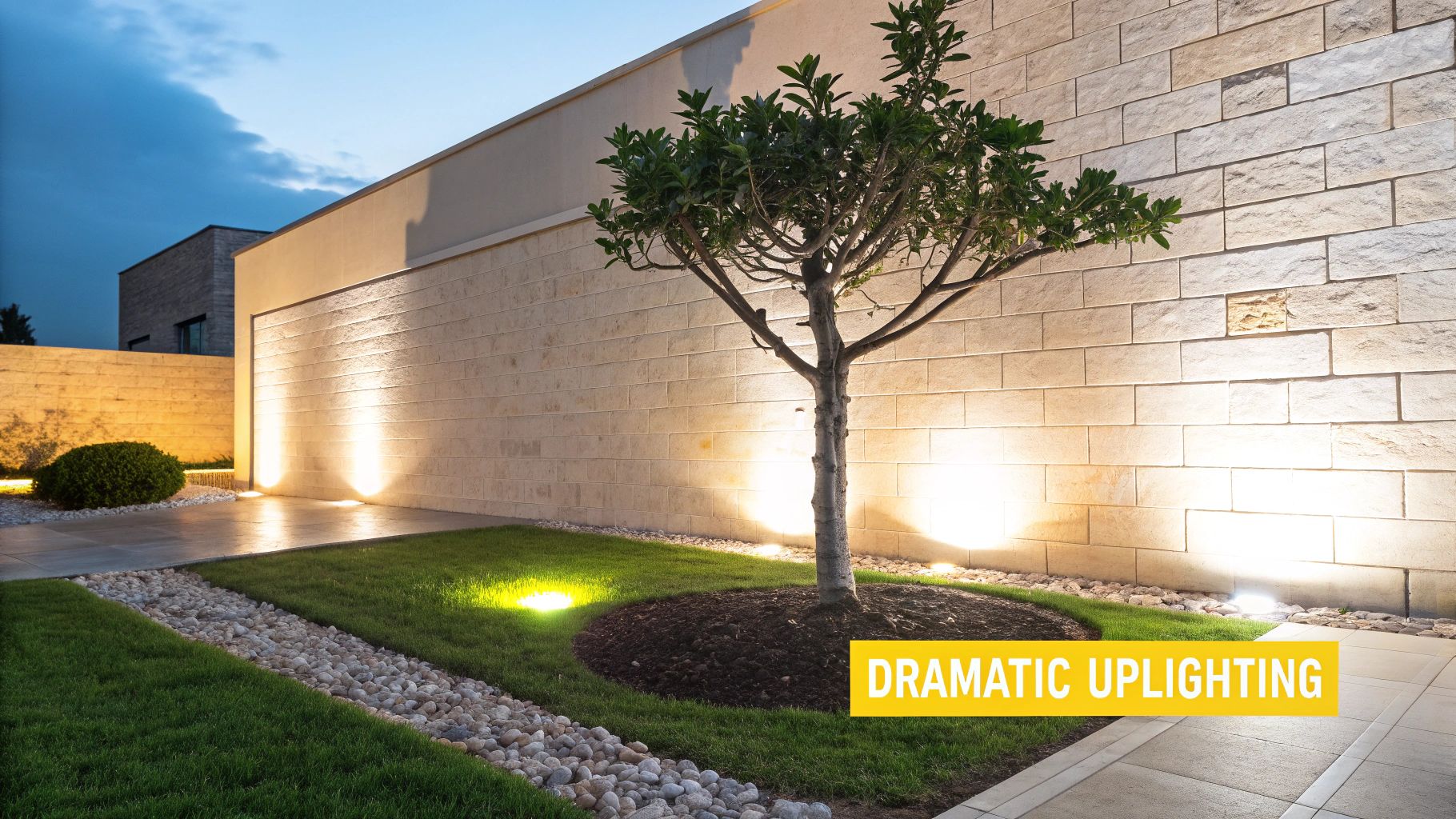
Uplighting is a foundational technique where fixtures are placed at ground level and aimed upward to wash key features like trees, stone walls, and architectural elements in a beautiful glow. For Knoxville homes with mature oak trees or the unique brickwork found in historic neighborhoods, this is one of the most effective landscape lighting design ideas for creating breathtaking drama and depth. By casting light from below, you reveal textures and forms that go unnoticed during the day, making a powerful statement that boosts curb appeal.
Why Use Uplighting?
This technique transforms flat, dark surfaces into three-dimensional points of interest. It's perfect for showcasing the majestic canopy of an old maple in a West Knoxville yard or illuminating the stone facade of a modern Hardin Valley home. The contrast between light and shadow adds a layer of sophistication and grandeur, making your property look more distinguished and secure after sunset.
How to Implement Uplighting
Achieving a professional look requires careful placement and fixture selection. Here are a few practical tips:
- Choose the Right Color Temperature: For a natural, inviting look on trees, brick, and stone, use a warm color temperature between 2700K and 3000K. This range mimics the warm glow of evening light, avoiding a harsh, sterile look.
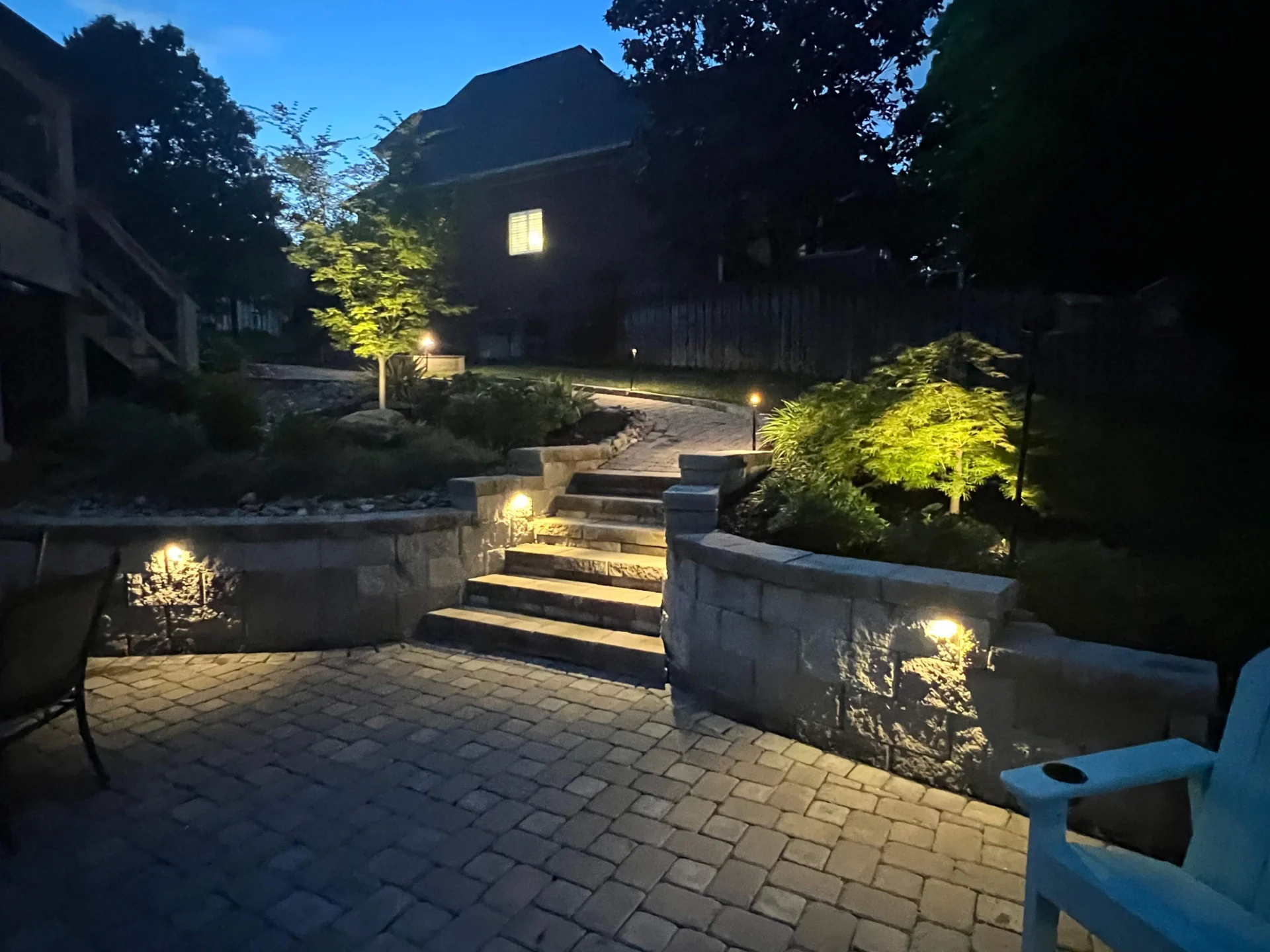
- Position Fixtures Thoughtfully: Place spotlights a few feet from a tree's base and angle them to capture both the trunk and the lower canopy. For walls, a wider wash light placed closer to the base creates a soft, even graze.
- Control the Light: Use glare shields to direct light precisely where you want it. This prevents light from spilling into neighbors' windows or creating distracting hot spots. A beam angle (the width of the light cone) of 30-45 degrees is often ideal for creating soft, appealing shadows.
By highlighting your home’s best assets from the ground up, uplighting provides an immediate and dramatic impact. Learn more about how we use this and other techniques on our 𝑖𝑛𝑠𝑒𝑟𝑡𝑙𝑖𝑛𝑘𝑡𝑜𝑙𝑎𝑛𝑑𝑠𝑐𝑎𝑝𝑒𝑙𝑖𝑔ℎ𝑡𝑖𝑛𝑔𝑝𝑎𝑔𝑒.
2. Path and Step Lighting: Guiding the Way with Safety and Style
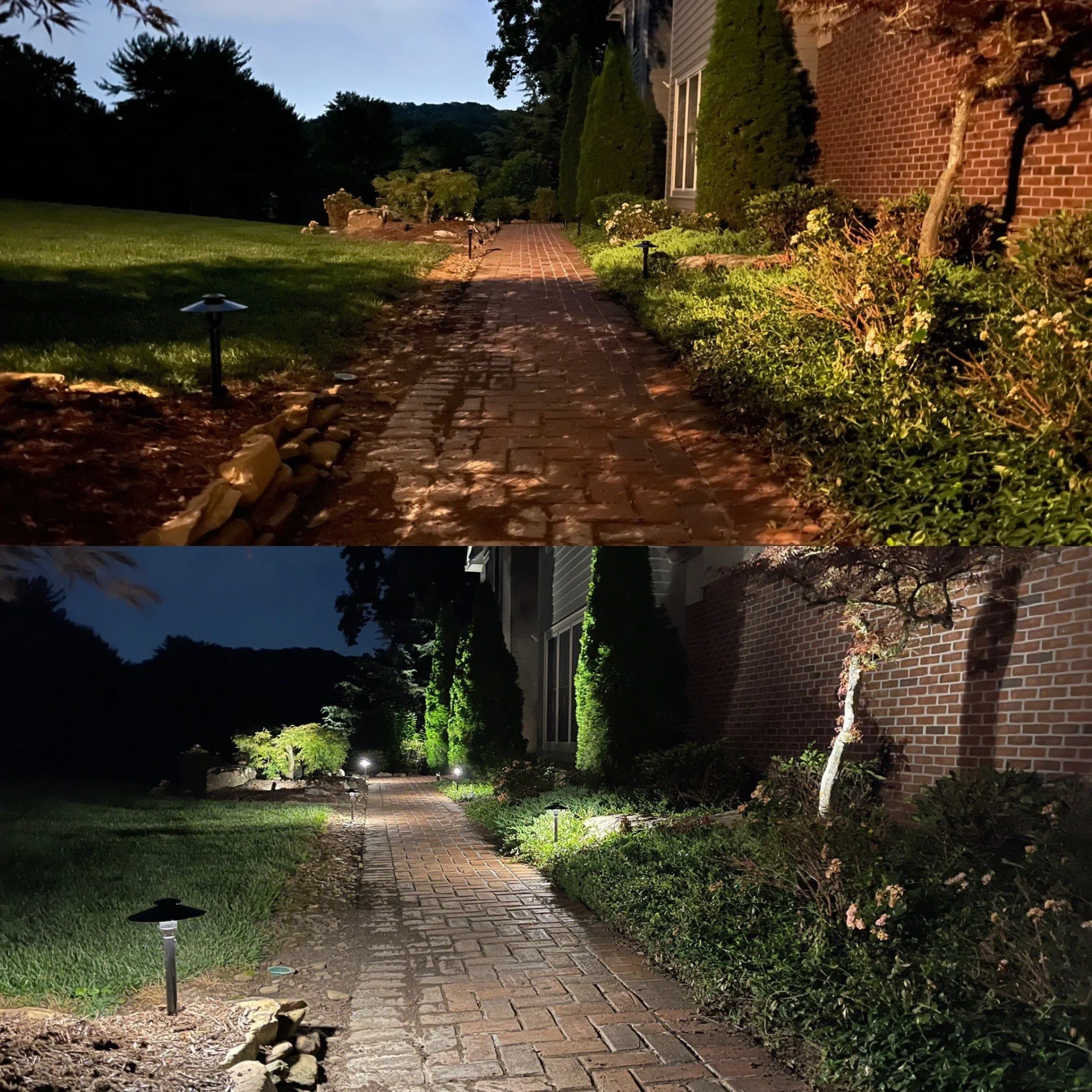
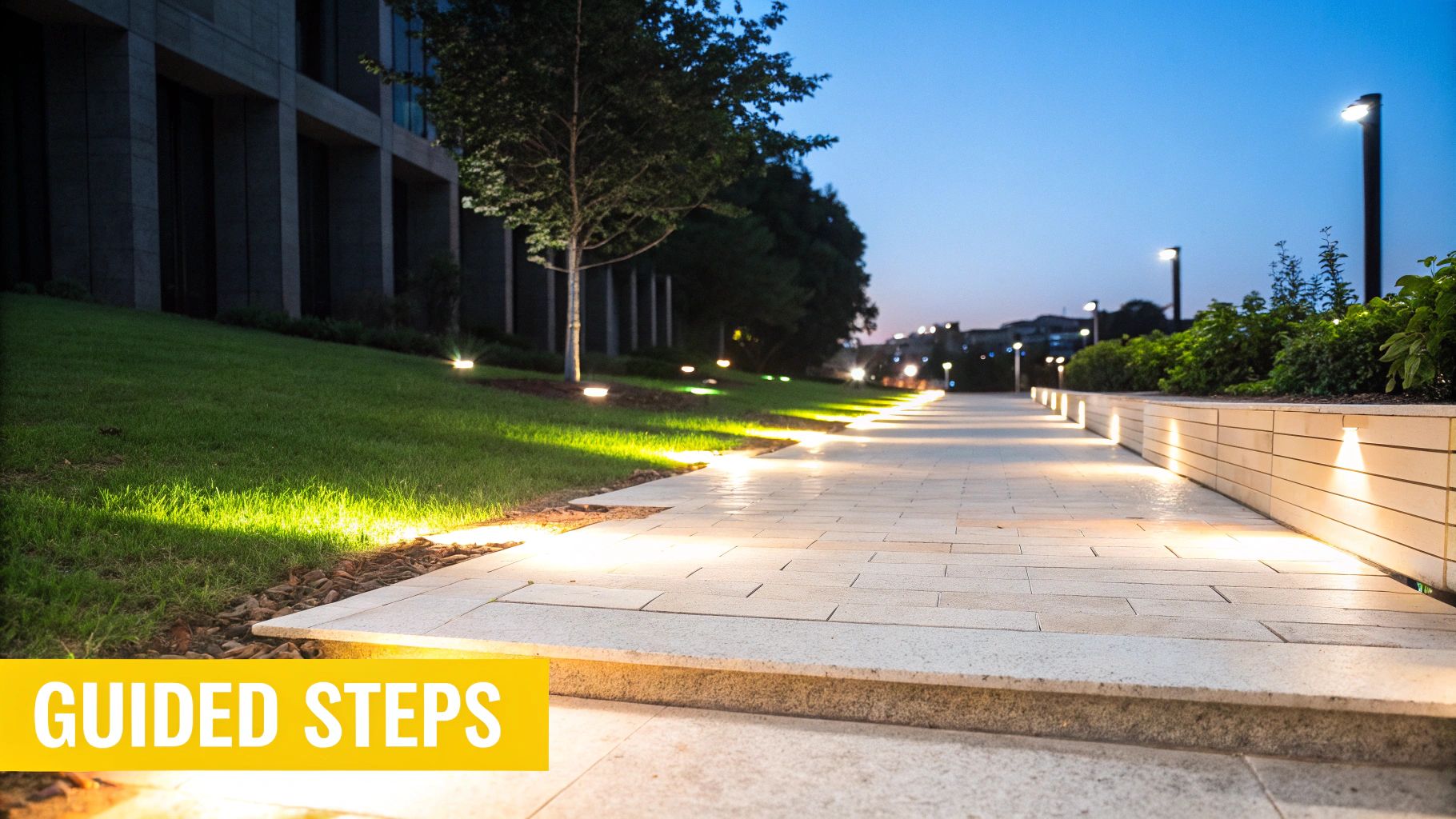
Path and step lighting is a crucial element that focuses on both safety and aesthetics. This technique involves installing low-profile fixtures along walkways, driveways, and stairs to illuminate the way, preventing trips and falls after dark. For homes in Knoxville, from hillside gardens in Sequoyah Hills to sloped driveways in Farragut, path lighting provides a welcoming and secure passage for family and guests while adding a subtle, sophisticated charm.
Why Use Path and Step Lighting?
Beyond its primary safety function, this technique defines the flow of your landscape and creates a beautiful, guided experience. It prevents dark, intimidating zones and softly highlights garden beds or stone borders along the way. For a business in downtown Knoxville, it ensures clients can safely navigate from the parking lot to the entrance, while for homeowners, it turns a simple walk to the front door into a visually pleasing journey.
How to Implement Path and Step Lighting
Effective path lighting guides without creating glare. Here are some practical tips for a professional-grade installation:
- Create a Soft, Inviting Glow: Use a warm color temperature around 2700K. This warm, amber light is inviting and easy on the eyes, creating a comfortable ambiance.
- Space Fixtures Correctly: Position lights approximately 8-10 feet apart, staggering them on opposite sides of the path. This "offset" pattern prevents a runway look and provides more natural, overlapping pools of light.
- Choose Durable Fixtures: Ensure all fixtures are made from high-quality, weatherproof materials like brass or copper that can withstand Knoxville's varied seasons. Low-profile designs are less likely to be damaged by foot traffic or lawn equipment. Learn more about the best options for low-profile pathway lights on switch-lights.com.
By thoughtfully illuminating your walkways and steps, you enhance safety and add a layer of elegant cohesion to your entire property.
3. Downlighting: Casting a Natural, Moonlight Glow
Downlighting is a subtle yet powerful technique that flips the script on traditional lighting. Instead of lighting from the ground up, fixtures are mounted high up in trees, on pergolas, or along architectural eaves and aimed downward. This method beautifully mimics the soft, natural glow of moonlight, casting delicate shadows and creating a gentle, widespread ambiance. For Farragut properties with expansive patios or Sequoyah Hills homes shaded by mature trees, this is one of the most elegant landscape lighting design ideas for illuminating usable spaces.
Why Use Downlighting?
This approach provides functional ambient light without creating harsh glares, making it perfect for illuminating gathering areas like decks, patios, and fire pits. It reveals the texture of flower beds and ground cover that uplighting might miss. The effect is enchanting and feels completely natural, as if the landscape is bathed in a permanent full moon, enhancing both safety and atmosphere.
How to Implement Downlighting
Creating an effective moonlight effect requires strategic placement and the right equipment. Here are some key tips:
- Mount High for a Wide Spread: To achieve a soft, diffuse glow, position fixtures at least 20 feet high in healthy, mature trees. This height allows the light beam to spread out, creating a more natural and even pattern on the ground below.
- Select a Warm, Inviting Color: A warm color temperature around 3000K is ideal for downlighting. This mimics the gentle hue of natural moonlight and creates a welcoming environment for outdoor living spaces.
- Use Secure, Professional-Grade Fixtures: Always ensure trees are strong enough to support the fixtures. Use proper mounting hardware that allows the tree to grow without being damaged. It’s also wise to combine downlighting with uplighting on the same tree to create a balanced, layered effect.
By casting light from above, downlighting provides a uniquely beautiful and functional illumination for your property. Learn more about how we use this and other techniques on our 𝑖𝑛𝑠𝑒𝑟𝑡𝑙𝑖𝑛𝑘𝑡𝑜𝑙𝑎𝑛𝑑𝑠𝑐𝑎𝑝𝑒𝑙𝑖𝑔ℎ𝑡𝑖𝑛𝑔𝑝𝑎𝑔𝑒.
4. Accent and Spotlighting: Creating Eye-Catching Focal Points
While uplighting paints broad strokes, accent and spotlighting use highly focused beams to draw attention to specific elements in your landscape, such as a garden sculpture, a bubbling water fountain, or a unique architectural detail. For homes in areas like Farragut or Sequoyah Hills with beautiful statuary or custom water features, this is one of the most powerful landscape lighting design ideas for creating deliberate, artful focal points. It guides the viewer's eye exactly where you want it to go, ensuring your favorite features are the stars of the nighttime scene.
Why Use Accent and Spotlighting?
This approach creates a curated, gallery-like experience in your outdoor space. It's perfect for highlighting the texture of a unique boulder, the intricate details of an art installation, or the cascading water of a fountain. By isolating a single object with light, you elevate its importance and create a powerful sense of purpose and elegance in your overall design. This technique adds layers of visual interest that prevent the landscape from feeling flat.
How to Implement Accent and Spotlighting
Precision is key to making accent lighting look intentional. Here are a few practical tips:
- Select the Right Beam Angle: For most features like statues or small trees, a narrow beam angle between 15 and 30 degrees provides a focused punch of light without excessive spill.
- Position for Dimension: Place the fixture slightly to one side of the object you are illuminating. This creates subtle shadows that reveal texture and give the feature a three-dimensional, sculpted appearance.
- Match Color to Material: Use a warmer color temperature (around 2700K) to enrich the look of stone, bronze, or wood. For water features, a cooler temperature (4000K) can enhance the crisp, reflective quality of the water.
- Keep Fixtures Hidden: Ensure the light source itself is not visible from primary viewing angles. Conceal fixtures behind shrubbery or use glare shields to keep the focus entirely on the illuminated object.
By skillfully placing a few focused lights, you can transform ordinary elements into extraordinary nighttime attractions. These same principles can also be applied to gathering areas. For more inspiration, explore these fire pit lighting ideas.
5. Water Feature Lighting: Creating a Luminous Liquid Glow
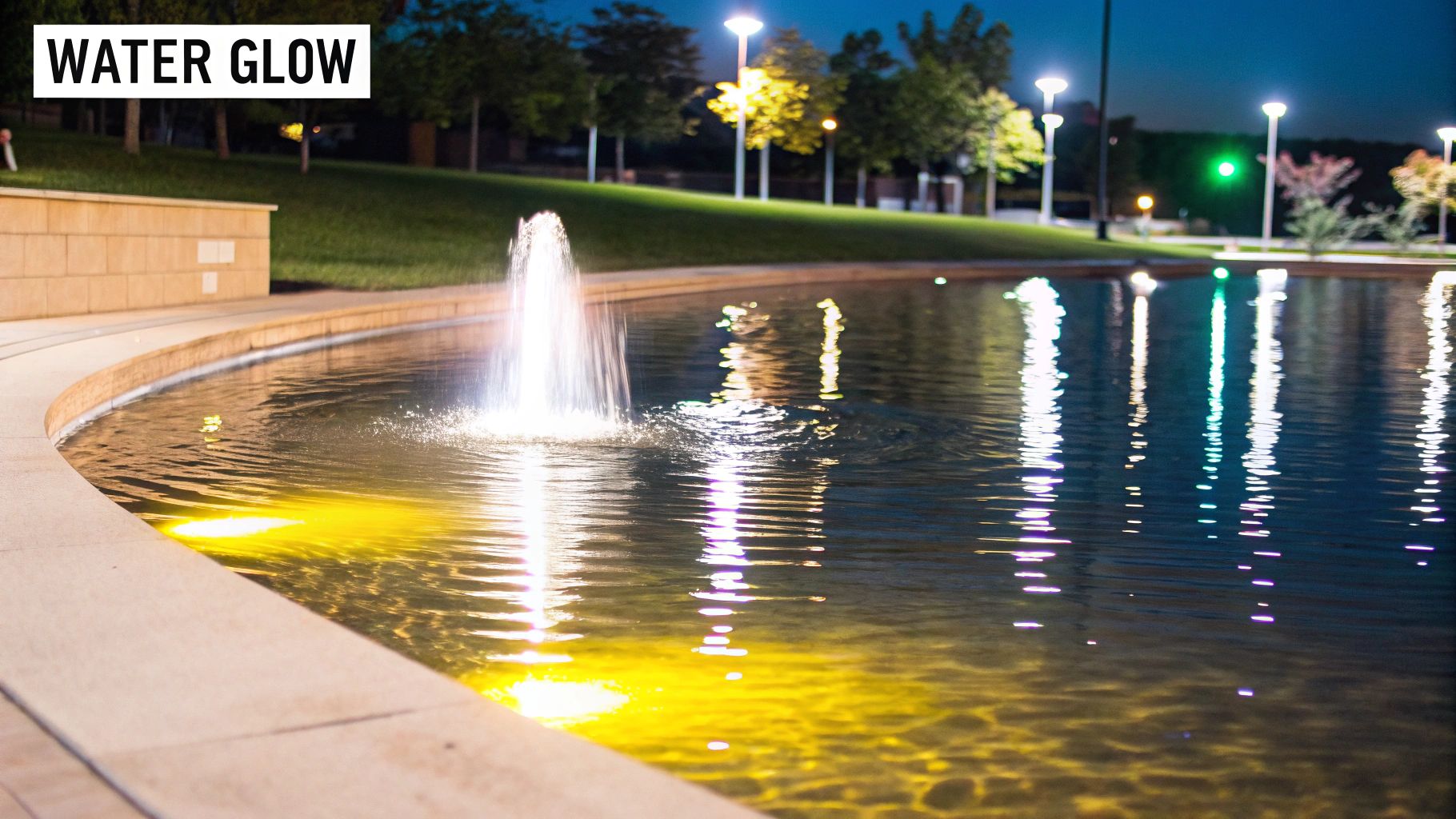
Lighting water features such as ponds, fountains, waterfalls, and pools adds a magical, dynamic quality to any landscape. This landscape lighting design idea uses submersible and strategically placed fixtures to illuminate the movement, reflection, and depth of water. For Knoxville homeowners with a backyard koi pond or a stylish poolside escape, illuminating these elements transforms them into stunning nighttime focal points. The interplay between light and moving water creates a mesmerizing, shimmering effect.
Why Use Water Feature Lighting?
This technique brings your water features to life after dark, creating a vibrant, reflective centerpiece that would otherwise disappear. It highlights the gentle cascade of a waterfall, the bubbling energy of a fountain, or the serene surface of a pool. The effect adds a layer of luxury and sophistication, turning a simple backyard in Farragut into a private resort-like oasis and enhancing the ambiance for evening entertaining.
How to Implement Water Feature Lighting
Properly illuminating water requires specialized fixtures and careful planning to ensure safety and achieve the desired effect. Here are some actionable tips:
- Select Submersible-Rated Fixtures: Always use lights specifically rated for underwater use (IP68) to guarantee safety and durability. Fixtures should be made from brass, bronze, or stainless steel to resist corrosion.
- Highlight Movement: Position lights to catch the motion. Place a fixture at the base of a waterfall aiming up to illuminate the cascading water, or place lights beneath a fountain jet to make the spray glow.
- Layer the Light: Combine underwater lighting with edge lighting around your pond or pool for a more complex and layered look. For more inspiration, explore these poolside lighting ideas on switch-lights.com.
- Use Warm, Natural Color: A warm white color temperature (around 2700K) gives water a clear, natural, and inviting appearance. While RGB color-changing lights can be fun for parties, warm white provides timeless elegance.
By carefully lighting your water features, you create a captivating and serene nighttime environment. Learn more about how we design and install these systems on our 𝑖𝑛𝑠𝑒𝑟𝑡𝑙𝑖𝑛𝑘𝑡𝑜𝑙𝑎𝑛𝑑𝑠𝑐𝑎𝑝𝑒𝑙𝑖𝑔ℎ𝑡𝑖𝑛𝑔𝑝𝑎𝑔𝑒.
6. Moonlighting: Crafting a Natural, Romantic Glow
Moonlighting is an elegant technique designed to mimic the soft, gentle glow of a full moon. By placing fixtures high up in mature trees and aiming them downward, this method casts a broad, diffuse light over your landscape. For Knoxville properties with canopies of old-growth trees or spacious garden areas, this is one of the most enchanting landscape lighting design ideas for creating a subtle, romantic, and natural ambiance that feels both safe and magical. The effect is a soft, dappled light filtering through leaves, creating beautiful, moving shadows on the ground below.
Why Use Moonlighting?
This approach provides widespread ambient illumination without the harshness of traditional floodlights. It’s perfect for creating a serene atmosphere over a large Farragut backyard, a patio dining area, or a winding garden path. Instead of highlighting a single object, moonlighting bathes an entire zone in a soft, ethereal light, making outdoor spaces feel more expansive and usable after dark.
How to Implement Moonlighting
Creating an authentic moonlit effect requires a delicate touch and strategic placement. Here are a few actionable tips:
- Position Fixtures High: To achieve a natural, downward cast, fixtures should be securely mounted at least 20-25 feet high in a sturdy tree. This height allows the light to spread out and soften before it reaches the ground.
- Use a Soft, Warm Light: A warm color temperature between 2700K and 3000K is essential for replicating the gentle hue of moonlight. Combine this with a fixture that has a wide beam angle and a diffusion lens to eliminate harsh edges and create a soft wash.
- Create Overlapping Pools of Light: Use multiple fixtures spread across different branches or trees to create layered, overlapping pools of light. This technique avoids isolated bright spots and produces a more cohesive, natural-looking scene.
By artfully recreating moonlight from above, this technique adds a layer of sophisticated, natural beauty to your property. Discover more about our approach to ambient lighting on our 𝑖𝑛𝑠𝑒𝑟𝑡𝑙𝑖𝑛𝑘𝑡𝑜𝑙𝑎𝑛𝑑𝑠𝑐𝑎𝑝𝑒𝑙𝑖𝑔ℎ𝑡𝑖𝑛𝑔𝑝𝑎𝑔𝑒.
7. Grazing Lighting: Revealing Rich Textures and Depth
Grazing is a sophisticated lighting technique that reveals the hidden beauty of textured surfaces by placing fixtures extremely close to them. Unlike a broad wash of light, grazing directs light across a surface at a very steep angle, catching every nook and cranny. This is one of the most artistic landscape lighting design ideas for highlighting materials like the stacked stone on a Farragut retaining wall or the rustic bark of a mature Tennessee hardwood. The interplay of intense light and deep shadow creates a dramatic, three-dimensional effect that adds incredible visual interest.
Why Use Grazing Lighting?
This technique is all about texture. Grazing turns a flat, ordinary wall into a captivating work of art after dark by emphasizing its material character. It’s the perfect method for drawing attention to the craftsmanship of a brick facade in a historic Knoxville home or the natural patterns in a boulder. By creating strong contrast, grazing adds a layer of depth and complexity that makes your landscape feel more dynamic and luxurious.
How to Implement Grazing Lighting
Proper execution is key to avoiding harsh hot spots and creating an elegant effect. Precision in placement makes all the difference.
- Position Fixtures Extremely Close: Place lights just 6-12 inches from the surface you intend to graze. This proximity is crucial for creating the long, dramatic shadows that define the technique.
- Use a Sharp Angle: Aim the light beam almost parallel to the surface, so it skims across it rather than hitting it directly.
- Select Narrow Beams: Choose spotlights with a narrow beam spread (10-25 degrees) to control the light precisely and maximize the textural effect without causing unwanted light spill.
- Match the Color Temperature: A warm white light (2700K-3000K) beautifully enhances natural materials like stone, brick, and wood, giving them a rich and inviting glow.
By artfully scraping light across your property’s best surfaces, grazing adds a professional touch that truly sets your design apart. Learn more about how we use this and other techniques on our 𝑖𝑛𝑠𝑒𝑟𝑡𝑙𝑖𝑛𝑘𝑡𝑜𝑙𝑎𝑛𝑑𝑠𝑐𝑎𝑝𝑒𝑙𝑖𝑔ℎ𝑡𝑖𝑛𝑔𝑝𝑎𝑔𝑒.
8. Silhouetting: Creating Dramatic and Artistic Outlines
Silhouetting is a powerful landscape lighting design idea that flips conventional techniques on their head. Instead of lighting a feature directly, you place a bright light source behind it, casting the object into a dark, dramatic silhouette against an illuminated background like a wall or fence. This technique is perfect for objects with distinctive, recognizable shapes, such as a Japanese maple or a unique sculpture, creating a bold and artistic statement that adds a layer of mystery and elegance to your property.
Why Use Silhouetting?
This technique is all about drama and definition. It uses negative space to draw the eye, turning a familiar object into a captivating piece of art. For a home in Farragut with a stunning garden sculpture or a property in Sequoyah Hills with beautifully gnarled trees, silhouetting can highlight these unique forms without revealing every detail. It adds depth and a high-design feel, making your landscape feel curated and intentional after dark.
How to Implement Silhouetting
Creating a successful silhouette depends entirely on contrast and placement. The goal is to make the background significantly brighter than the feature itself.
- Choose Recognizable Shapes: This technique works best on subjects with interesting and clear outlines. Wispy grasses, sculptural trees like crape myrtles, or unique architectural elements are excellent candidates.
- Conceal the Light Source: Place one or more bright, wide-beam floodlights on the ground between the object and the background surface. Ensure the fixture itself is hidden from the main viewing angles to preserve the illusion.
- Create High Contrast: The background surface should be evenly washed with bright light. A light-colored wall or fence is ideal for reflecting the light and making the dark silhouette pop. Test from your primary viewpoints, like a patio or kitchen window, to ensure the effect is perfect.
By playing with light and shadow, silhouetting offers one of the most artistic landscape lighting design ideas available. Learn more about how we create custom lighting art on our 𝑖𝑛𝑠𝑒𝑟𝑡𝑙𝑖𝑛𝑘𝑡𝑜𝑙𝑎𝑛𝑑𝑠𝑐𝑎𝑝𝑒𝑙𝑖𝑔ℎ𝑡𝑖𝑛𝑔𝑝𝑎𝑔𝑒.
9. Cross Lighting: Sculpting Features with Multidirectional Light
Cross lighting is an advanced technique that uses two or more light sources aimed from different angles to illuminate a single feature. This multi-directional approach eliminates the harsh, one-sided shadows often created by a single spotlight, revealing the full three-dimensional form of an object. For Knoxville-area homes with unique specimen trees or garden statues, cross lighting is one of the best landscape lighting design ideas for achieving a rich, layered, and professional look that feels truly immersive.
Why Use Cross Lighting?
This technique brings a theatrical quality to your landscape, sculpting features with a balance of light and soft shadow. It’s perfect for making a Japanese maple in a Farragut backyard or a prized sculpture the undisputed star of the garden. By controlling how light and shadow fall across a surface, you can emphasize texture, define shape, and create a sophisticated visual depth that makes your property stand out.
How to Implement Cross Lighting
Achieving a balanced and beautiful cross-lit effect requires thoughtful planning and precise execution. Here are a few key tips:
- Establish Key and Fill Lights: Designate one fixture as your primary "key light," which provides the main illumination. Use a second, less intense "fill light" from another angle to soften shadows created by the key light. This is a classic technique used in professional photography.
- Balance Light Intensity: The goal isn't to blast a feature with equal light from all sides. Use fixtures with different brightness levels or dimmers to create a subtle interplay of light and shadow that feels natural.
- Vary Your Angles: Place lights at different heights and angles, such as one uplight and one side-light, to reveal the most interesting textures. Testing the effect from your home's main viewing points is crucial for getting the angles just right.
- Maintain Cohesive Color: Ensure all fixtures illuminating a single feature share the same color temperature (e.g., 2700K). Mismatched temperatures can create a disjointed and unnatural appearance.
By using light from multiple perspectives, cross lighting adds a layer of artistry and dimension to your landscape. Explore more advanced lighting concepts on our 𝑖𝑛𝑠𝑒𝑟𝑡𝑙𝑖𝑛𝑘𝑡𝑜𝑙𝑎𝑛𝑑𝑠𝑐𝑎𝑝𝑒𝑙𝑖𝑔ℎ𝑡𝑖𝑛𝑔𝑝𝑎𝑔𝑒.
10. Smart and Automated Landscape Lighting Systems
Smart lighting systems bring modern convenience and unparalleled control to your landscape, integrating advanced LED fixtures with wireless controls, sensors, and smartphone apps. This technology allows you to automate and customize every aspect of your outdoor lighting from anywhere. For tech-savvy homeowners in Farragut or businesses in Downtown Knoxville, these systems offer one of the most versatile landscape lighting design ideas, enabling you to schedule lighting, change colors, adjust brightness, and create preset scenes for holidays, parties, or quiet evenings.
Why Use Smart and Automated Systems?
This approach provides ultimate flexibility and energy efficiency. Imagine your landscape lighting automatically adjusting for seasonal changes in sunset times or switching to a festive color scheme for a UT Vols game day with a single tap. Smart systems enhance both security and ambiance while optimizing energy consumption. For holiday enthusiasts, this also makes setting up and controlling seasonal displays, like those found on our 𝑖𝑛𝑠𝑒𝑟𝑡𝑙𝑖𝑛𝑘𝑡𝑜𝐶ℎ𝑟𝑖𝑠𝑡𝑚𝑎𝑠𝑙𝑖𝑔ℎ𝑡𝑠𝑝𝑎𝑔𝑒, easier than ever.
How to Implement Smart Lighting
A successful smart system requires thoughtful planning to ensure reliability and ease of use. Here are a few essential tips:
- Ensure Strong Connectivity: Reliable operation depends on a strong WiFi signal reaching all your outdoor fixtures. Consider installing outdoor-rated WiFi extenders if your signal is weak in certain areas of your yard.
- Plan for Expansion: Design your initial installation with future additions in mind. Choosing a system that can easily scale will save you time and money as you decide to illuminate more areas of your property.
- Integrate with Your Smart Home: For seamless control, select a system that integrates with your existing smart home hub, like Amazon Alexa or Google Assistant. This allows you to manage your landscape lights with voice commands alongside your other smart devices.
By embracing automation, you gain complete control over your outdoor environment. Discover how our smart lighting solutions can elevate your property on our 𝑖𝑛𝑠𝑒𝑟𝑡𝑙𝑖𝑛𝑘𝑡𝑜𝑙𝑎𝑛𝑑𝑠𝑐𝑎𝑝𝑒𝑙𝑖𝑔ℎ𝑡𝑖𝑛𝑔𝑝𝑎𝑔𝑒.
10-Point Landscape Lighting Comparison
| Technique | 🔄 Implementation complexity | ⚡ Resource requirements | 📊 Expected outcomes | 💡 Ideal use cases | ⭐ Key advantages |
|---|---|---|---|---|---|
| Uplighting | Low–Medium — simple ground fixtures, careful aiming | Low–Moderate — ground fixtures, low‑voltage wiring, shields | Dramatic vertical highlights, depth and silhouettes | Specimen trees, façades, columns | ⭐⭐⭐ Emphasizes height; cost‑effective; theatrical |
| Path and Step Lighting | Low — straightforward spacing and mounting | Low — low‑power LEDs, stakes or recessed fixtures; solar options | Even, low‑glare guidance; improved safety | Walkways, driveways, steps, decks | ⭐⭐ Safety, subtle elegance, energy‑efficient |
| Downlighting | Medium — requires secure overhead mounts and wiring | Moderate–High — overhead fixtures, support hardware, safe mounts | Natural, moon‑like ambient spread with soft shadows | Patios, seating areas, tree canopies | ⭐⭐ Natural ambience; even coverage; intimate spaces |
| Accent and Spotlighting | Low–Medium — aiming and beam selection critical | Moderate — focused high‑intensity fixtures; adjustable beams | Strong focal emphasis; dramatic drama on features | Sculptures, fountains, architectural details | ⭐⭐⭐ Precise focus; customizable color/intensity |
| Water Feature Lighting | Medium — waterproofing and safe underwater installation | Moderate — submersible fixtures, corrosion‑resistant materials, maintenance | Dynamic reflections and movement; strong focal point | Ponds, fountains, waterfalls, pools | ⭐⭐ Eye‑catching water effects; color options; relaxing |
| Moonlighting | Medium — high placements and diffusion required | Moderate — overhead fixtures, diffusion lenses, sturdy mounts | Soft, diffuse ambient glow mimicking moonlight | Large lawns, tree canopies, resorts, spas | ⭐⭐ Subtle, natural ambiance; low light pollution |
| Grazing Lighting | Low–Medium — precise close placement and angle control | Low–Moderate — narrow‑beam fixtures placed near surfaces | Enhanced texture and pronounced surface detail | Stone walls, bark, masonry, architectural textures | ⭐⭐ Dramatic texture; highlights material character |
| Silhouetting | Medium — requires strong backlighting and positioning | Moderate — bright backlights, elevated placement | Bold silhouettes with high contrast; defined edges | Distinctive trees, sculptural forms, topiary | ⭐⭐ Striking visual statements; shape definition |
| Cross Lighting | High — multiple angles, balancing and coordination | High — several fixtures, controls, higher installation cost | Layered, dimensional lighting with reduced harsh shadows | Specimen trees, façades, sculptures, high‑end projects | ⭐⭐⭐ Professional, natural balance; excellent depth control |
| Smart & Automated Systems | High — networking, programming, and integration | High — smart fixtures, controllers, sensors, reliable Wi‑Fi | Programmable scenes, automation, energy monitoring & remote control | Whole‑property automation, seasonal/scene control, security | ⭐⭐⭐ Remote convenience; energy savings; flexible scenes |
Ready to Bring Your Knoxville Landscape Lighting Design Ideas to Life?
Navigating the world of landscape lighting can feel complex, with terms like grazing, silhouetting, and moonlighting each describing a unique artistic and functional approach. We've explored ten distinct techniques, from the foundational drama of uplighting architectural features to the practical necessity of path lighting that guides guests safely through your Farragut garden. We’ve seen how downlighting can mimic natural moonlight from a pergola and how accent lighting can turn a simple statue into a dramatic focal point.
The true power of a sophisticated lighting plan lies not in using a single one of these landscape lighting design ideas, but in layering them to create a cohesive and dynamic nighttime scene. Imagine your Hardin Valley home with soft moonlighting filtering through an oak tree, while subtle path lights mark the walkway to your front door and a single, perfectly aimed spotlight highlights the texture of your home’s stone facade. This is how a property is transformed from merely visible to truly enchanting.
Key Takeaways for a Professional-Grade Design
To distill these concepts into actionable steps, remember these core principles:
- Think in Layers: A masterful design combines ambient (general), task (functional), and accent (focal) lighting. Moonlighting provides the ambient base, path lighting serves the task, and uplighting creates the accents.
- Focus on the Effect, Not the Fixture: Instead of thinking "I need five path lights," consider the desired outcome: "I need a soft, welcoming glow along this walkway." This shift in perspective opens up more creative solutions.
- Embrace Control: Smart systems with timers, dimmers, and zone controls allow you to create different "scenes" for different occasions, from a quiet evening on the patio to a lively backyard party. This adds convenience and enhances energy efficiency.
- Prioritize Quality: Knoxville's climate, with its humid summers and occasional winter freezes, demands professional-grade, weather-resistant fixtures. Investing in durable brass or copper fixtures and a properly installed low-voltage system ensures your design will last for years.
By combining techniques like the subtle texture-revealing power of grazing with the dramatic flair of silhouetting a unique Japanese maple, you are no longer just illuminating your property; you are curating an experience. You are extending the functional hours of your outdoor living spaces, enhancing security, and dramatically boosting curb appeal. These landscape lighting design ideas serve as your palette, empowering you to paint a nighttime masterpiece that reflects your home’s unique character.
Ready to transform your home after dark? Get a free lighting design consultation.