Table of Contents
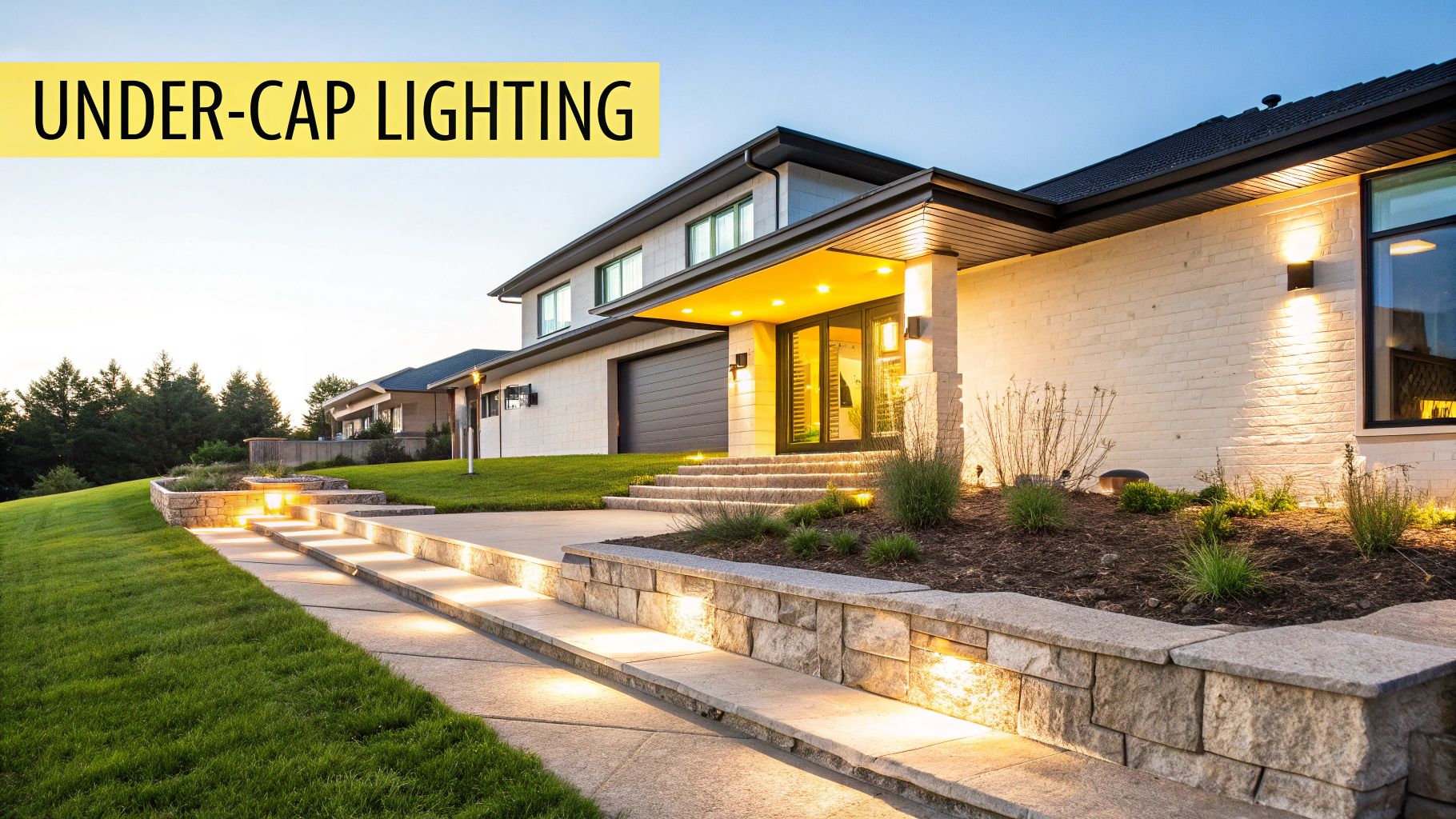
Retaining wall lights under cap are a simple way to transform your outdoor space after dark across Knoxville, Farragut, Hardin Valley, and surrounding neighborhoods. If your retaining walls look like dark barriers in the evening, these slim, under-cap fixtures bring style, safety, and energy savings—perfect for homeowners, holiday decorators, event planners, and small business owners alike.
You’ll enjoy softer steps by the patio, an inviting glow for parties or outdoor dining at your café, and up to 85% energy savings compared to old-school fixtures. Plus, these lights tuck neatly under capstones, avoiding trips and maintaining clean lines against brick or stone walls.
Ready to make your walls come alive at night? Let’s dive into why retaining wall lights under cap are becoming Knoxville’s go-to choice.
Why Choose Retaining Wall Lights Under Cap
Homeowners and small business owners in Knoxville and nearby areas are turning to under-cap fixtures for good reason:
- Retrofit-Friendly Design works with existing walls—no major demolition needed.
- Space-Efficient Profile stays hidden, so you avoid awkward trip hazards.
- Ambient, Directed Light highlights pathways, garden textures, and holiday décor when paired with roofline Christmas lights.
- Long-Life LEDs last 25,000–50,000 hours, slashing maintenance chores.
- Energy Savings hover around 85% compared to traditional fixtures.
Under-cap lighting transforms dim retaining walls into welcoming nightscapes for backyard barbecues, wedding receptions, and outdoor diners.
These slim fixtures slip under standard stone or concrete caps and sit flush to the surface. That low profile guides every footstep after dark—whether you’re hosting a fall festival or adding subtle uplighting for event décor. Holiday decorators can even combine them with roofline Christmas lights for a festive glow that complements your retaining wall lights under cap.
Meanwhile, through the mid-2020s, the global landscape lighting market was valued at approximately USD 12.5–14.9 billion, with forecasts pointing to 8–9% annual growth through the late 2020s. Niche products like under-cap LEDs are riding that wave. Discover the full market breakdown here: Read the full report on Grandview Research. insertlinktolandscapelightingpage
The chart below shows how demand for under-cap LEDs aligns with overall landscape lighting growth.
Under Cap Light Market Drivers
Below is a snapshot of the key forces behind the rise of retaining wall under-cap lights in residential outdoor lighting:
| Driver | Metric | Impact |
|---|---|---|
| LED Efficiency | 70–85% energy savings | Faster ROI for homeowners |
| Retrofit Friendliness | 12V low-voltage kits | Simple installs on existing walls |
| Market Growth | 8–9% annual increase | Wider product availability |
Each of these drivers underscores why under-cap LEDs are fast becoming the smart, stylish choice for every Knoxville landscape.
Local Case Study
In Farragut, a couple refreshed their limestone retaining wall with six under-cap LEDs. They opted for 3000K fixtures and a 30° beam angle to achieve a uniform wash. The entire project wrapped up in under five hours—and now their patio stays illuminated well after sunset.
- Color Temperature: 3000K for a crisp, warm tone
- Beam Angle: 30° for even illumination
- Spacing: 4 ft intervals for smooth coverage
- Parts Cost: Approx $50 per fixture
No electrician was needed—and the results speak for themselves. For more design inspiration around Knoxville, check out our guide: Explore landscape lighting ideas.
Understanding these market trends and real-world examples makes it clear why retaining wall lights under cap are the smart, stylish solution for your space. Ready to elevate your outdoor area? Learn how under-cap LED kits from Switch Lights can transform your retaining walls tonight—check energy costs and start planning with confidence.
Selecting Fixtures And Power Options
Choosing the right under-cap lights makes all the difference in smooth installation and lasting performance. Knoxville’s humidity and occasional heavy rains mean you’ll want fixtures that shrug off corrosion while delivering precise beam control.
Take a moment to balance your needs against local climate quirks—avoiding headaches down the line helps your project finish on time.
LED Module Characteristics
Modern LED modules emit crisp light without heat, and you’ll find finishes ranging from marine-grade stainless steel to impact-resistant aluminum.
- Wattage spans 1.5–6 W, matching the output of a 20–50 W incandescent.
- Expect energy savings of 70–85% and runtimes between 25,000–50,000 hours.
- Beam angles from 10° (for intimate uplighting) to 30° (for broader step washes).
- Color temperatures between 2700K (warm glow) and 3000K (crisp white).
These specs will guide your choices whether you’re browsing Farragut nurseries or ordering online.
Power Source Options
Hardwired systems rely on a 12V transformer, giving steady power from a central unit. Solar-hybrid kits blend photovoltaic panels with battery backups—no trenching required and perfect for small business patios or event venues.
Sizing tips:
- Add your total lumen load, then bump by 20% to choose the right driver.
- Look for multi-tap outputs if you have long runs; they counteract voltage drop.
If wiring feels daunting or you need code-compliant peace of mind, hiring a licensed electrician is never a bad call.
Finish Selection Guidance
In Knoxville’s climate, finish matters as much as beam pattern. Marine-grade stainless steel stands up to humidity and pollen. Anodized aluminum gives durability on a budget.
- Bronze develops a natural patina over time.
- Black powder-coat blends into darker stone walls.
- Clear lacquer seals extend lifespan against salt and debris.
Wipe your caps regularly to prevent buildup from local foliage.
Cost Considerations And Driver Sizing
Under-cap fixtures typically run $30–$80 each. Transformers cost $50–$200, depending on taps and enclosure quality. Expect labor rates of $75–$150 per hour in Knoxville.
- Solar-hybrid kits start near $150 per panel and battery.
- Waterproof connectors average $5–$10 apiece.
To size your driver, sum each fixture’s wattage and add a 20% buffer—this guardrail avoids overload.
Key Takeaway: A 3W under-cap fixture can pump out 200 lumens while costing under $7 per year in energy.
Fixture Performance Comparison
| Fixture Type | Wattage | Lumen Output | Estimated Annual Energy Cost |
|---|---|---|---|
| 3W Under-Cap LED | 3 W | 200 lm | $6.50 |
| 6W High-Output LED | 6 W | 400 lm | $13.00 |
| 4.5W Warm White Module | 4.5 W | 300 lm | $9.75 |
Use this table to match lumen needs with your budget. Even lower-watt options deliver solid brightness at minimal cost.
Next Steps
With fixtures, drivers, finishes, and costs in hand, you’re ready to finalize your shopping list. Whether you opt for a hardwired transformer or solar-hybrid setup, these specs ensure your under-cap lighting project in Knoxville will shine for years.
Planning Wiring And Trenching
Mapping your under-cap modules along the retaining wall before you dig keeps last-minute changes to a minimum. Early voltage-drop calculations matter, especially on runs over 50 feet—ensuring each light stays bright.
You’ll choose between a hardwired 12V transformer or a solar-hybrid kit. Hybrids mean less trenching, but be sure to size the battery for those overcast winter days in Hardin Valley.
Key Considerations:
- Trench Depth: Bury wiring 6–12 inches below the frost line to handle Knoxville’s freeze-thaw cycles.
- Conduit Choice: Shield cables from moisture, critters, and garden tools for reliability.
- Permit Tips: Knoxville often requires GFCI outlets and permits for excavation near retaining walls.
- Voltage Drop Rules: Keep loss under 3% with the proper wire gauge on longer runs.
Low-voltage (12V) systems dominate residential under-cap installs. They reduce installation costs and shock risk while saving $20–$60 per fixture annually versus halogen.
Expect parts and labor between $25–$120 per fixture installed. Dive deeper into these savings in this residential landscape lighting market insights.
Local benchmarks in Knoxville line up with these figures. Don’t forget GFCI protection near your transformer—it’s a code must and circuit lifesaver.
Creating Your Site Plan
Sketch a simple elevation of your wall, marking fixture spacing to avoid hot spots or shadows. Then layer in transformer locations, cable routes, and trench lines on one clear diagram.
Factoring in a 6–12 inch frost-line depth from the start saves rework and helps electricians move swiftly once on site.
The infographic below walks you through every step—from selecting wattage to dialing in color temperature.
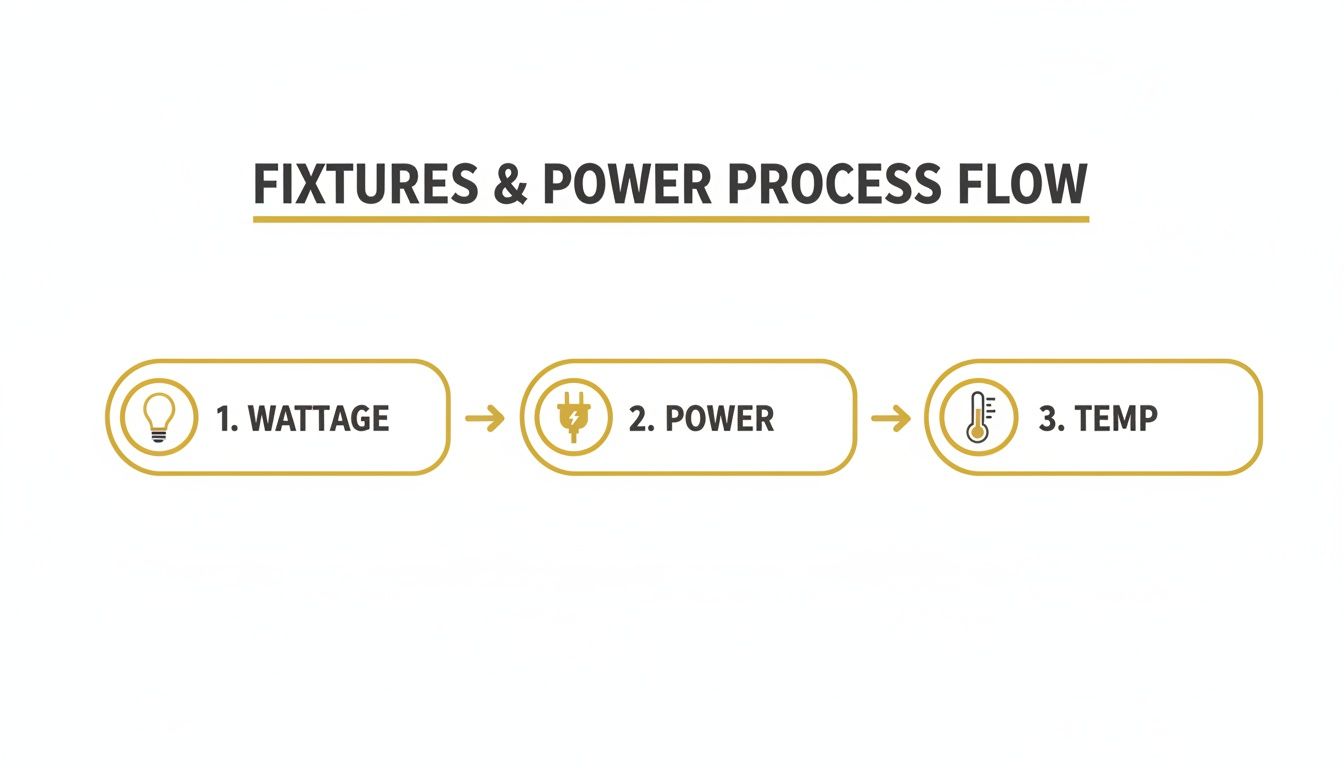
Before you break ground, gather these essentials into a tote:
- 12V direct-burial cable
- Conduit sections and couplers
- Waterproof connectors and a GFCI outlet kit
- Shovel, tape measure, and trench markers
Keep trenches at least 6 inches below frost depth and never skip conduit in damp zones.
For a real-world example, see our recent Knoxville backyard landscape lighting project featuring trees and pathways aglow.
With your plan, diagram, and materials in hand, you’re ready to dig with confidence. Next up: mounting fixtures under the cap, sealing against the elements, and finishing with a professional polish.
Measure and label each run before burial—it makes future troubleshooting a breeze. Visible markers at transformer and junction points also satisfy Knoxville’s inspection requirements and simplify winter checks.
This thorough prep ensures code-compliant trenches that keep your under-cap retaining wall lights performing flawlessly.
Mounting And Sealing Under Cap Fixtures

Once trenching and wiring are in place, it’s time to sink those under-cap lights. Proper alignment isn’t optional—it keeps stone intact and sends a clean wash of light across your wall.
Start by snapping a centerline on each cap with chalk or pencil. Use a diamond hole saw that matches your fixture’s outer diameter for precise cuts.
Cutting Precise Recesses
Measure twice and mark clearly. A shallow score around your circle helps the saw bite without wandering. Go slow with limestone or concrete—firm but gentle pressure reduces chipping and delivers crisp edges.
Tools for clean cuts:
- Marking tool for precise centerlines
- Diamond hole saw blade
- Protective eyewear and gloves
- Level to verify a flat surface
Vacuum out dust, drop the housing in place, and ease rough edges with a round file for a snug fit.
Installing Fixtures Flush
Seating the LED module flush with the cap surface is key to a sleek look. Behind the driver, slip in a moisture barrier to keep water at bay.
Supporting drivers in dry-set niches is simple with foam blocks or strips of closed-cell tape for perfect alignment.
Flush-mounted fixtures eliminate trip hazards while casting light directly downward.
Press each light into its niche until tight. A slight tilt adjustment ensures the beam grazes the wall for maximum texture.
Key actions before sealing:
- Test-fit each module and verify orientation
- Check that all depths are consistent across caps
- Power on briefly to confirm beam focus
Sealing And Weatherproofing
A good silicone sealant rated IP67 is non-negotiable for dust and moisture resistance. Run a continuous bead around the fixture’s bezel, then add a second seal at the back of the recess. This twin-barrier wards off freeze-thaw damage in Knoxville’s winters.
Don’t skip a thin moisture barrier membrane behind the housing. For extra resilience, prime stone before sealing—this boosts silicone flexibility when temperatures dip.
Final Checks And Finishing
Wipe away sealant smears right away. Let everything cure fully, following the sealant manufacturer’s instructions. Inspect edges for gaps or bubbles before covering trenches.
Label each run near the transformer for easy troubleshooting and seasonal checks.
Tuck cables under the caps and step back. This under-cap strategy shines on patios across Farragut and Hardin Valley. You might also explore our patio lights guide: Patio Lighting Guide.
Pro Tips And Common Pitfalls
Consistent spacing prevents bright spots and maintains a uniform glow. In most hardscapes, 3–4 foot intervals deliver the best wash.
- Stick to 3–4 ft spacing for even illumination
- Test-fit a small batch before full installation
- Keep tools clean to avoid stray sealant smears
Avoid over-packing sealant—too much squeeze-out looks sloppy. A light bead smoothed with a joint tool gives a crisp edge.
Properly seated and sealed under-cap lights resist up to 100 freeze-thaw cycles in Knoxville’s climate.
Testing Troubleshooting And Maintenance
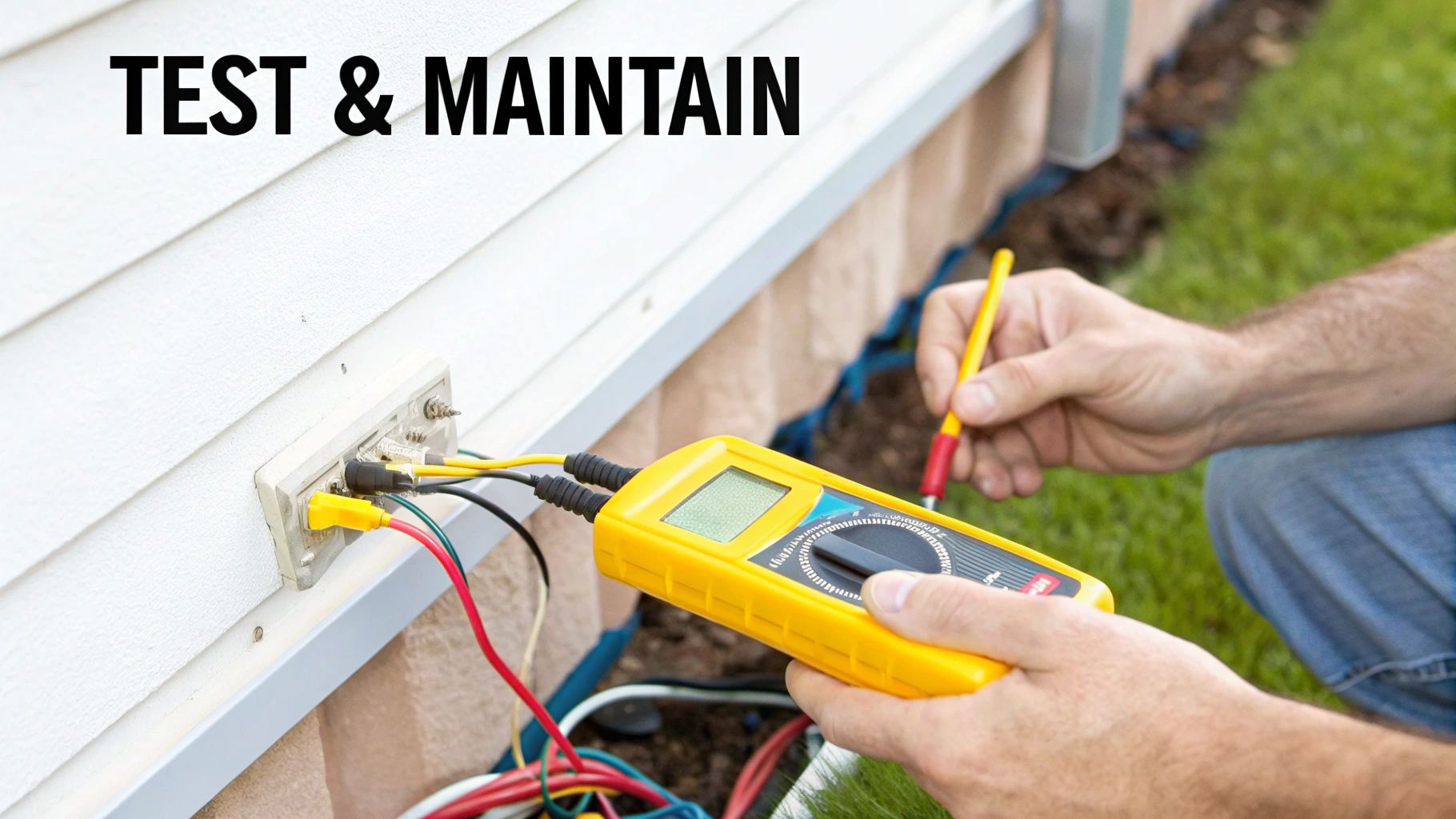
Before backfilling trenches, power up each circuit. A simple test can expose loose connectors or dim LEDs before they’re buried—saving hours of digging later.
Every module should glow at full strength before you cover it with soil. That way, you’ll know exactly which block needs attention—no guesswork once everything’s covered.
Using A Multimeter For Voltage Checks
A digital multimeter is your best friend for checking each LED run. Switch to DC voltage, clip leads to the transformer output, and compare against the driver’s rating. On a 12V system, expect to see between 11.5–12.5V.
- Inspect connectors for corrosion and swap rusty parts
- Rotate modules or adjust positions for an even beam
- Tighten all screw terminals at the driver and transformer box
Addressing Flicker And Moisture Intrusion
Flicker often means a loose wire or a worn-out driver. Start by reseating connectors and coating junctions with dielectric grease. That step often restores a solid beam.
After heavy rain or snowmelt, dead spots can mean water breached the seal. Fix moisture issues early to prevent repeat outages.
Water intrusion is the leading cause of under-cap fixture failures in Knoxville’s freeze-thaw cycles.
Troubleshooting Installation Issues
| Symptom | Voltage Reading | Recommended Action |
|---|---|---|
| Dim Beam | 10 V | Adjust driver output or shorten run |
| Flicker | 11–12 V | Reseat connectors and secure fittings |
| No Light | 0 V | Check transformer power and GFCI status |
Routine Troubleshooting Steps
When something goes wrong, methodical checks are your ally.
- Power cycle the transformer and check for fault indicators
- Tighten every cable connection at driver and fixtures
- Swap in a known-good module to isolate bad fixtures
Work through each step—zero in on the culprit faster and save time.
Seasonal Maintenance Checklist
| Maintenance Task | Frequency | Key Tip |
|---|---|---|
| Seal Inspection | Annually | Do before the freeze-thaw cycle |
| Lens Cleaning | Semi-annually | Use mild soap and soft cloth |
| Voltage Check | Seasonally | Aim for 11.5–12.5V readings |
If driver output dips below 10V or your GFCI trips twice, it’s time for a replacement. Labeling each run makes future checks a breeze.
When To Seek Professional Help
Some issues demand a licensed electrician—especially hidden wiring breaks or stubborn voltage dips. Pros can trace faults inside conduit and ensure your installation meets local codes.
Call a pro if:
- Brightness varies across several fixtures on the same circuit
- Power spikes or drops persist after tightening every connector
- Ground-fault trips continue despite drying and resealing
A full system diagnostic flags aging components before they fail. Keeping a maintenance log of readings and repairs is a future lifesaver.
Hiring A Professional For Retaining Wall Lights Under Cap
There are times when an under-cap project stretches beyond your DIY comfort. You’re looking at long wiring runs, transformer calculations, and permit hurdles in Knoxville. Bringing in a licensed electrician can spare you headaches down the road.
Whether your wall faces Knoxville’s historic brick or Hardin Valley’s frost heave, a pro navigates permits and inspections with ease. They know GFCI protection inside and out.
- Detailed Site Assessment cuts down on surprise costs and delays
- Rodent-Proof Conduit shields wiring from critter damage
- Weatherproofing Warranties keep moisture out for years
Assessing Your Skill And Scope
You might breeze through placing a few lights on a low wall, but Farragut’s ordinances demand precise burial depths and conduit types. That’s where a DIY approach can derail.
Costs for permits, code-compliant conduit runs, and transformer sizing often surprise DIYers mid-project—proof that cutting corners costs more.
Comparing Contractor Bids
Electricians around Knoxville charge $75–150 per hour, covering labor, materials, and inspections. Breaking bids down line by line helps you spot padded hours or pricey markups.
| Service Component | Typical Hourly Rate | What It Covers |
|---|---|---|
| Rough-in and Trenching | $75 | Site prep, trench depth compliance |
| Wiring and Transformer Hookup | $100 | Low-voltage wiring, GFCI install |
| Weatherproofing Finishes | $150 | Sealants, conduit seals, inspections |
Investing in a certified electrician cuts the risk of water intrusion and voltage drops.
Before signing, request proof of liability insurance and a written warranty on all outdoor fixtures. Comparing bids side by side reveals labor breakdowns and material markups. Always check references from recent under-cap lighting projects in your neighborhood.
When To Hire A Pro
Complex layouts—walls longer than 30 feet, overhead transformer cabinets, smart-home integration—almost always call for expert hands. The same goes for event venues or small businesses wanting multi-circuit setups.
Pros also offer emergency repair services after storms. They’re familiar with Knoxville’s freeze-thaw cycle and keep your under-cap lights shining.
Ready to transform your retaining wall lights under cap and your outdoor living space? Get a free lighting design consultation and explore more at insertlinktoChristmaslightspage.
Frequently Asked Questions
Spacing For Even Illumination
Getting a smooth wash of light under a cap comes down to fixture spacing. Generally, placing lights 3–4 feet apart provides an even glow along most retaining walls. Use tighter gaps on rugged stone and stretch spacing on flatter concrete.
- Textured Stone: 3 ft spacing
- Smooth Concrete: 4 ft spacing
- Tight Curves: 2–3 ft spacing
On a 20-foot wall, plan about six fixtures to hit the sweet spot.
Sizing Your Transformer
First, tally your under-cap module wattage. Then add a 20% buffer to avoid overloads and extend driver life. For example, eight 3W lights total 24W; add 20% to choose a transformer rated for at least 28.8W.
Always oversize by 20% to prevent overload and extend driver life.
If runs are long, pick a unit with multiple taps to keep brightness consistent.
Selecting Color Temperature
Stonework comes alive under warm light. A 2700–3000K range highlights textures and casts a cozy glow. Above 3500K, light can feel clinical on rustic surfaces. Choose warm tones for ambiance, cooler tones for crisp definition.
Resealing And Maintenance
Water intrusion is the enemy of low-voltage fixtures. Inspect seals yearly before the freeze-thaw cycle hits. Look for cracks in silicone beads and refresh with an IP67-rated sealant when needed. Proper maintenance preserves performance and avoids costly repairs.
| Maintenance Task | Frequency | Key Tip |
|---|---|---|
| Seal Inspection | Annually | Do before winter sets in |
| Lens Cleaning | Semi-annually | Use mild soap and soft cloth |
| Voltage Check | Seasonally | Aim for 11.5–12.5V readings |
Integrating Smart Controls
Wi-Fi transformers let you group zones, set schedules, and dim lights from your phone. Homeowners in Knoxville cut energy use by 15% simply by automating run times and light levels.
Smart controls save 15% energy annually.
Ready to see your retaining wall lights under cap in a whole new light? Get a free lighting design consultation.